AI-assisted development is no longer experimental. Claude, GPT, and Copilot are writing WordPress plugins, React Native screens, and Next.js API routes in production codebases today. The promise is seductive: ship faster, explore more patterns, let the model handle boilerplate while you focus on architecture.
But velocity without guardrails is just controlled chaos with better syntax highlighting.
The risk is not that AI writes bad code—it’s that AI writes plausible code that fails in ways you won’t catch until a user does. A recent WP Tavern conversation with Chris Reynolds frames the problem clearly: large language models are powerful and unpredictable. They can generate accessible markup one moment and introduce a security hole the next. The output looks right. It might even pass your first manual test. Then it breaks under load, leaks data through a query, or silently degrades performance because the model optimized for token efficiency instead of runtime behavior.
If you’re a fractional fullstack engineer, you don’t have a QA team to catch this. You don’t have a junior dev to review every AI-generated block. You have your judgment, your test suite, and your reputation. That means you need a different strategy than “generate code, ship code, hope.”
The problem is not the model—it’s the missing contract
LLMs are non-deterministic. Ask the same question twice, get two different implementations. One might use a WordPress transient correctly. The other might write directly to the database and skip sanitization. Both compile. Both might work in your local environment. Only one survives production.
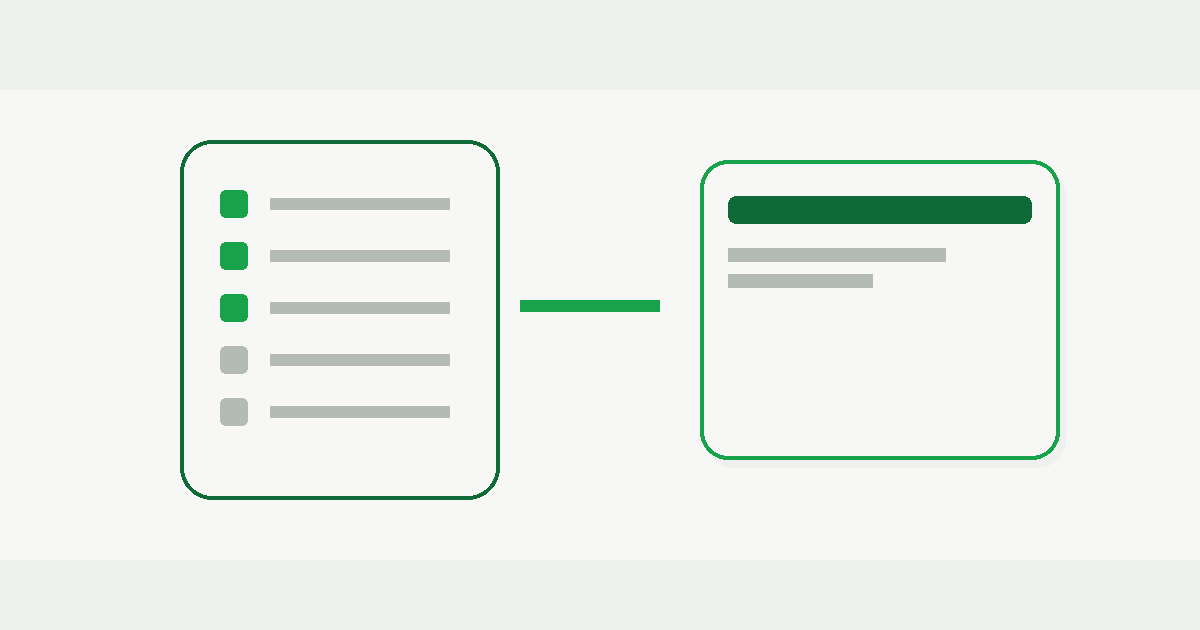
Reynolds advocates for project contracts and reviewer agents—structured constraints that define what “correct” means before the model writes a line of code. A contract might specify: “This WordPress plugin must use prepared statements for all database queries. It must register a REST endpoint with permission_callback. It must enqueue scripts with wp_enqueue_script, not inline echo.” The reviewer agent checks the output against those rules before you even see it.
This is not about distrusting AI. It’s about making AI useful in a context where you can’t afford to debug every generated function by hand. The contract becomes your quality gate. The reviewer becomes your first line of defense. You still own the final call, but you’re not starting from “does this look right?” You’re starting from “does this meet the spec?”
What this looks like in practice
For WordPress work, a contract might include:
- Use WordPress coding standards (PHPCS with WordPress rulesets)
- No direct database writes—use $wpdb->prepare or the Options API
- Escape all output with esc_html, esc_url, or wp_kses
- Register blocks with block.json, not inline PHP
- Enqueue assets through wp_enqueue_* hooks, not hardcoded tags
For React Native, you might specify:
- Use TypeScript strict mode (relevant given React Native 0.87’s strict TypeScript API)
- No inline styles—use StyleSheet.create
- Handle AsyncStorage errors with try/catch
- Use React Navigation’s typed routes
- Test on both iOS and Android before marking complete
The contract is not a wishlist. It’s a checklist the model must satisfy. If the output doesn’t pass, you don’t review it—you regenerate with stricter constraints or write it yourself.
When to let AI write, when to write yourself
AI is excellent at:
- Boilerplate (WordPress plugin headers, React Native screen scaffolds, GraphQL schema stubs)
- Repetitive transforms (converting REST responses to GraphQL resolvers, mapping WordPress post types to TypeScript interfaces)
- Exploratory code you’ll rewrite anyway (proof-of-concept API clients, throwaway admin pages)
AI is risky for:
- Security-sensitive logic (authentication, authorization, data sanitization)
- Performance-critical paths (database queries under load, React Native list rendering, image optimization)
- Anything that touches user data or payment flows
- Code you won’t have time to audit before shipping
The decision is not “AI or human.” It’s “AI with guardrails or human from scratch.” If you can’t define the contract clearly enough for a reviewer agent to enforce it, you probably can’t trust the model to get it right unsupervised.
The changing shape of fractional work
This shift changes what it means to be a senior engineer. You’re no longer just writing code—you’re writing specifications that machines execute and constraints that machines respect. Your value is not in typing faster. It’s in knowing which patterns are safe to automate and which require human judgment.
Reynolds describes this as a move toward “playfulness and accessibility”—AI makes it easier to try ideas, but it also makes it easier to ship broken ideas. The fractional engineer’s job is to preserve the exploration without inheriting the risk. That means:
- Writing contracts before prompts
- Reviewing outputs against specs, not vibes
- Treating AI-generated code as a draft, not a deliverable
- Owning the decision to ship, even when the model wrote the implementation
If you’re building WordPress sites or React Native apps as a one-person practice, you can’t afford to debug AI mistakes in production. You also can’t afford to ignore AI entirely—your competitors are using it, and clients expect faster iteration. The answer is not to slow down. It’s to build the scaffolding that lets you move fast without breaking things.
Key takeaways
- AI-generated code introduces unpredictable failure modes that manual review alone won’t catch—use project contracts and reviewer agents to enforce quality gates before you see the output.
- Define what “correct” means (WordPress coding standards, TypeScript strict mode, security constraints) before the model writes a line, and reject anything that doesn’t pass the spec.
- Reserve AI for boilerplate and exploratory work; write security-sensitive, performance-critical, and user-data logic yourself, or audit it with the same rigor you’d apply to a junior developer’s pull request.